Most buyers walk into a Roslyn showing having already decided how the historic district works. Either they assume the whole town operates under a preservation board that signs off on paint colors, in which case they mentally add six months and a design consultant to any renovation. Or they assume "historic district" is mostly a marketing term for a cute downtown, in which case they skip the fine print entirely and get surprised at the permit counter.
Both assumptions are wrong in the same direction. They both misread where the actual restriction sits, and that misreading changes what a Roslyn purchase actually costs you in time and money.
The district covers the whole town. The design review board doesn't.
Roslyn's National Historic District is unusual because it isn't a preserved commercial block surrounded by ordinary neighborhoods. Because the edges of the early mining town have not been expanded by modern development, Roslyn's Historic District encompasses the entire built-up portion of town. The city's own preservation guidelines describe the surviving building stock as a virtually intact stock of modest miner's cottages and commercial buildings built during Roslyn's greatest period of growth and development, 1886-1920, while the municipal code frames the designation itself around a slightly different window, the city of Roslyn National Historic District designation 1890 to 1930. Either way, if you're looking at a pre-1930 cottage in Roslyn, it sits inside the district by default.
What doesn't happen by default is design review. The city's Historic Register Design Review chapter makes clear that the Certificate of Appropriateness requirement, the actual permission slip you need for exterior work that isn't covered by an exemption, attaches to properties designated to the Roslyn register of historic places, a separate local listing from simply sitting inside the district boundary. Being surrounded by 1900s neighbors doesn't put your own house under the microscope. Being individually listed can, when the proposed exterior work isn't covered by an exemption.
That distinction is the whole ballgame for a buyer. A house can be a century old, sit two blocks from the Brick Tavern, and still not trigger the full Certificate of Appropriateness process, because it is not individually listed on the local register. A house that has been individually listed can face a genuinely different renovation calendar.
What triggers review, and what doesn't
| Situation | Review required? |
|---|---|
| Property individually listed on the Roslyn register of historic places | Yes, Certificate of Appropriateness for exterior work not covered by an exemption |
| Interior work that does not alter the exterior, regardless of listing status | No, under Roslyn's SEPA document |
The exemption list is explicit on this point. Development activities that involve properties listed on the Roslyn register of historic places require compliance with the historic register design review process, while interior work that does not alter the exterior of the structure is exempt. Gut the kitchen, refinish the floors. None of that touches the historic register process. What lands you in front of the Roslyn Planning and Historic Preservation Commission is an exterior change on a property that carries the individual listing and is not covered by an exemption.
The rules that catch buyers off guard
For the subset of homes that are individually listed, or for any new construction and commercial-zone work that falls under the citywide design standards, the specifics are narrow and worth knowing before you plan a project.
Window replacement has a proportion rule. The predominant exterior windows shall be rectangular and have a vertically oriented aspect ratio between 1.5:1 and 3:1 and have a minimum separation distance of six inches. A wide picture window that reads as "mountain contemporary" elsewhere in Kittitas County won't pass as a like-for-like replacement on a listed Roslyn cottage.
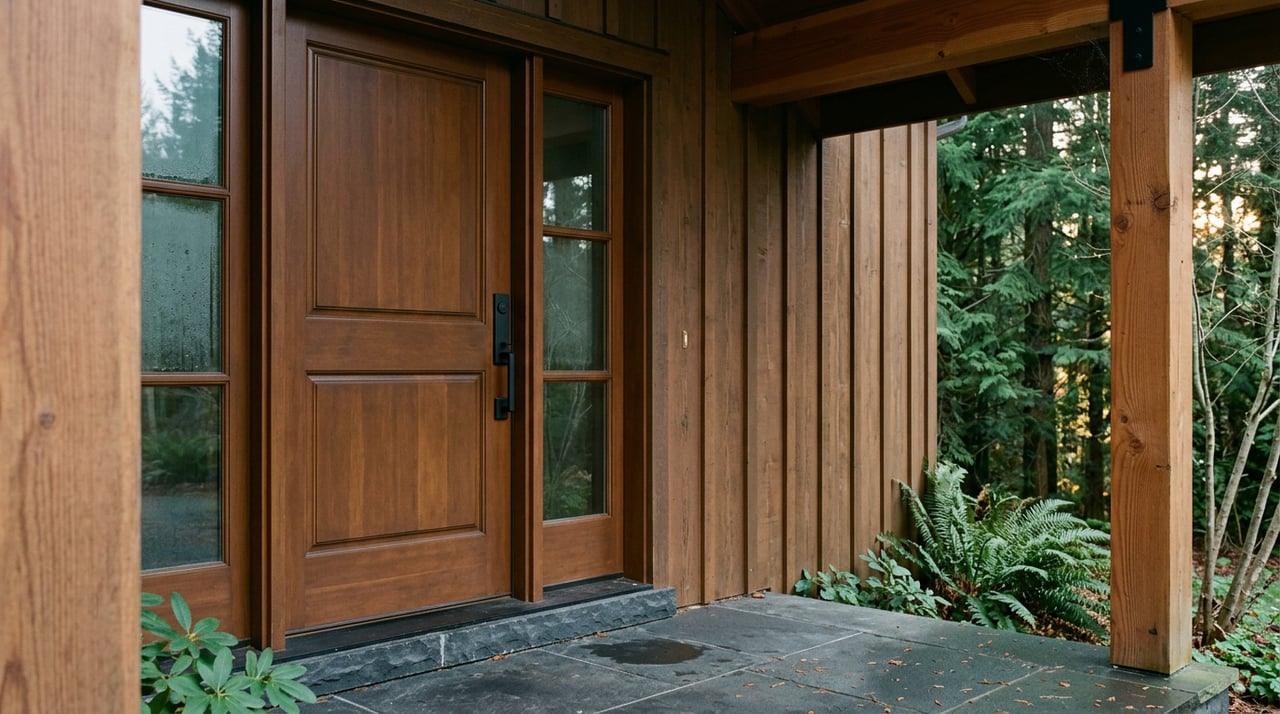
Front doors are more restricted than side or back doors. Sliding glass doors are barred from front facades outright.
Fencing has a materials list. Picket, solid wood, board on board, wood and wire, post and rail, and wrought iron fencing are the recommended styles, and Roslyn's municipal code prohibits chain link fences. For metal fence posts, the framing must be made of heavy rounded pipe at least two inches in diameter.
Roofing and solar have their own limits. Roofing can't be corrugated fiberglass, and solar panels are allowed, but only on roofs.
None of this means you can't modernize a Roslyn house. It means the modernizing has to happen inside a specific visual vocabulary if the property is individually listed, and the full design guidelines spell out the vocabulary in detail.
The closing-timeline math
If your Roslyn purchase includes exterior work you're planning to do right after close, and that work isn't covered by an exemption, the Certificate of Appropriateness process has its own clock, and it doesn't move at the speed of a typical remodel.
Applications go to the Roslyn Historic Preservation Commission, and property owner applicants must fill out an application for a Certificate of Appropriateness, with three sets of plans submitted to the RHPC office three weeks prior to the scheduled meeting, as specified in Roslyn's preservation guidelines. The application itself is processed as a Class 1A permit under the city's broader permitting chapter, and work can commence only after receiving approval from the RHPC, a certificate of appropriateness issued, and all submitted plans accepted and approved by the RHPC office with all modifications, if any.
In practice, a buyer planning a front-porch rebuild or a fence replacement on a listed property should allow time for the approval process if the work isn't covered by an exemption, plus whatever time it takes to prepare plans that already meet the window, door, and fencing specifics above. Skipping the step has consequences beyond a stop-work order. Violation of the rule can be grounds for the commission to recommend to the city council that the property be removed from the Roslyn register of historic places, which is not a small thing if that listing is also what's making the tax benefit below available.
A tax benefit for historic-property rehabilitation
The restriction side of historic listing gets attention. The offsetting financial side gets skipped over just as often.
Washington's special valuation program exists specifically to offset the cost of rehabbing a listed historic property. The state legislature created it during its 1985 session, as Washington approached its centennial year, with the preservation of historic resources as an explicit goal, and properties listed on the register of historic places may be eligible for a special tax valuation on their rehabilitation. Deadlines and fees are set locally, so a Roslyn buyer should confirm current dates with the Kittitas County Assessor's office, but the state framework itself applies statewide through the Department of Archaeology and Historic Preservation.
There's also a financing wrinkle worth budgeting for regardless of listing status. Mortgage underwriting on historic homes can be more rigorous because lenders generally assume greater upkeep and lower energy efficiency, and historic properties are less likely to fit low or zero down payment products like USDA, FHA, and VA loans. A conventional loan is typically the more realistic path for a pre-1930 Roslyn purchase.
What this changes about how you shop
According to CrossCountry Mortgage, homes on the National Register aren't protected by the register itself, so a non-federal owner can generally do what they want with the property. What actually constrains a Roslyn buyer is the local register listing, and that's a fact you can check before you write an offer, not after. Ask whether the specific address is individually listed on the Roslyn register of historic places or simply located within the district boundary. That single question, together with whether your planned work is covered by an exemption, tells you whether your renovation plan needs a design consultant and time for design review, or just a regular building permit.
For a broader look at how Roslyn's historic character sits alongside its modern mountain-town life, our earlier piece on Roslyn's mining town roots and modern mountain life covers the town's day to day texture. If you're still weighing Roslyn against neighboring options, Roslyn vs. Ronald vs. Cle Elum breaks down how the three towns actually differ for a weekend or full-time buyer.
A short FAQ
Does every house in Roslyn need historic board approval before I renovate? No. Only properties individually listed on the Roslyn register of historic places require a Certificate of Appropriateness for exterior work that isn't covered by an exemption. Being inside the district boundary alone does not.
Can I renovate the interior of a listed Roslyn property without review? Yes. Interior work that doesn't alter the exterior of the structure is exempt from historic register design review under the city's code.
Can a listed Roslyn cottage qualify for Washington's special valuation? Properties listed on the register of historic places may be eligible for a special tax valuation on their rehabilitation. Confirm current requirements with the Kittitas County Assessor.
Historic listing status is a fact you can verify before you write an offer, and it's exactly the kind of detail that determines whether a Roslyn purchase comes with a straightforward renovation or a longer approval calendar. If you're weighing a specific address and want a clear read on what it actually restricts, the Rau Peterson Team can walk through the listing status, the local process, and the numbers with you. Start with your current home's value at our instant home valuation tool or browse current Roslyn listings to see what's available now.
This article is general information, not legal, tax or financial advice. Consult a qualified professional about your situation.