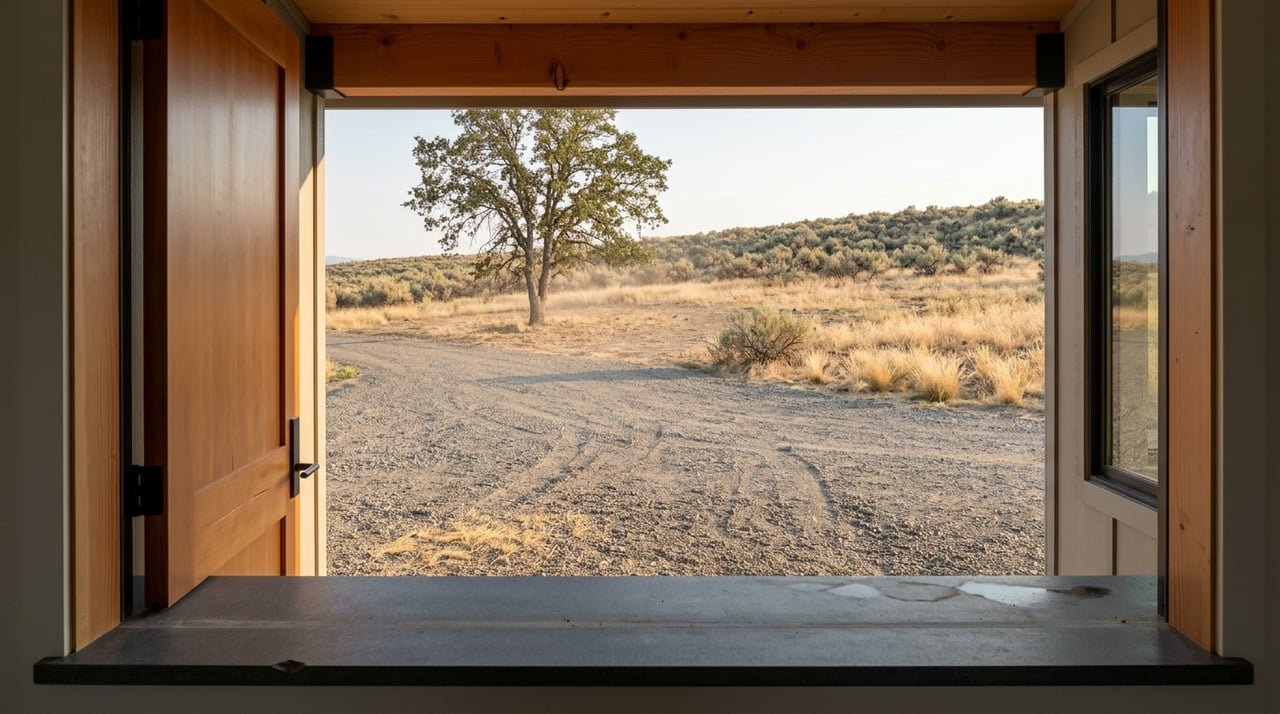
What happens when the acre you just bought doesn't come with water?
It's a question most buyers never think to ask until they're already under contract on a piece of Kittitas Valley acreage, picturing a barn, a shop, maybe a mountain-contemporary build with views of the Stuart Range. Two lots on the same gravel road can look identical on paper: same acreage, same zoning, same rolling views. One of them can have a building permit in hand. The other can sit waiting on a state agency. The difference isn't visible in the listing photos. It's buried in a groundwater map most out-of-area buyers have never heard of.
Groundwater rules took effect in 2015
Here's the part that surprises people who assume rural land in the West still means abundant water: the Yakima River Drainage Basin, which covers most of Kittitas County, is fully appropriated. There is no new groundwater available for new appropriations under state law. The rights that matter most carry priority dates before May 10, 1905.
Because of that scarcity, the county and the Washington State Department of Ecology settled on a rule that took effect December 2, 2015: any new groundwater use in the Yakima Basin portion of Kittitas County, which includes drilling a well for a new house, requires a Water Budget Neutral mitigation certificate before a drop can legally come out of the ground, and the use has to be metered. Skip the mitigation step and there's no legal path to a well, no matter how many acres you own.
Three zones, three very different building timelines
Kittitas County maps every parcel into a green, yellow, or red water bank zone, viewable through the county's own COMPAS mapping tool. The color tells you which mitigation path is even available and how long it's likely to take.
| Zone | Groundwater permit required? | Who reviews it | Typical timeline |
|---|---|---|---|
| Green, no-permit path | No | Kittitas County Public Health | About 2 weeks, according to Daily Record News |
| Green, Wilson-Cherry sub-basin carve-out | Yes, but reviewed locally | Kittitas County Public Health | About 2 weeks |
| Green, elsewhere | Yes | Washington Dept. of Ecology | About 1 year |
| Yellow | No | Washington Dept. of Ecology | About 6 months |
| Red | N/A | No water bank serves this zone, according to Daily Record News | No standard path |
That middle green row is the detail most buyers miss entirely. The county negotiated special standing to process mitigation locally for parcels in the Wilson-Cherry Creek sub-basin, even when those parcels would otherwise need a state-reviewed groundwater permit. Two lots can sit in the same green zone, look equally buildable, and be months apart in practice simply because one falls inside that sub-basin boundary and the other doesn't.
Red zone is its own category. As of the rule change, buyers there have no county or established private water bank to purchase from. The only paths are locating a direct seller of an existing senior water right in the appropriate basin, or building around a cistern system as outlined in county code. Neither is something you want to discover after you've already waived your inspection contingency.
What the water actually costs, once you can get it
When the mitigation rule first took effect, the county's own water bank priced its two packages at $3,000 or $4,000, depending on whether the parcel already had access to outdoor irrigation. Package A covers 275 gallons a day for indoor domestic use only. Package B adds 25 gallons a day for up to 500 square feet of outdoor irrigation, for buyers with no other outdoor water source.
Private water banks fill the gap for parcels the county program can't reach, and they price differently. Bourne Water Bank, which backs its mitigation with senior pre-1905 rights and serves the Teanaway basin, the mainstem Yakima, and the Kittitas Valley, currently quotes $4,500 for the water itself, a $3,000 administration fee covering the Water Budget Neutral determination and certificate processing, and roughly $1,000 in recording and escrow costs. All in, that's close to $8,500 for a mitigation package covering indoor use plus up to 500 square feet of irrigation in the Kittitas Valley.
The math matters because it changes what "build-ready" actually means on a spec sheet. A green-zone lot with an OTC-eligible mitigation path might cost a few thousand dollars and two weeks of paperwork. A yellow-zone lot with no existing certificate could mean an $8,000-plus private mitigation purchase and a wait measured in months, on top of whatever the land itself costs.
How water status appears in listing language
Some listings specifically advertise a parcel's water status. These details can help buyers assess a parcel's water status and any remaining due diligence.
A listing that mentions gorgeous views, gravel access, and power at the road, but says nothing about water zone or mitigation status, leaves those details unclear. Confirm the parcel's water status during due diligence, before closing.
The acreage and the water underneath it are separate considerations in Kittitas County, so check both when evaluating a parcel.
What to check before you write an offer
For anyone eyeing raw acreage or a building lot near Ellensburg, the due diligence list looks different from a typical resale purchase. Before you get attached to a specific parcel:
- Pull the parcel on the county's COMPAS mapping tool to confirm its water bank zone (green, yellow, or red) and whether it falls within a special processing sub-basin like Wilson-Cherry.
- Ask whether the parcel requires a groundwater permit.
- Ask directly whether a Water Budget Neutral mitigation certificate is already in place. If it is, the hardest and slowest part of this process is already done.
- If it isn't in place, get pricing from both the county's water bank and a private option, since the gap between an OTC county package and a private certificate can run into the thousands.
- Build the realistic timeline, anywhere from two weeks to about a year, into your closing date and your construction schedule, not just your purchase agreement.
This is exactly the kind of groundwork our team walks through with builders, investors, and second-home buyers looking at acreage across Kittitas County, whether it's a homesite tucked into the Ellensburg valley or a build-ready parcel elsewhere in the region. We've walked similar build-versus-buy tradeoffs with clients considering land in Chelan County too, and the same rule applies everywhere: the land and the water are rarely sold as a single, simple package.
A short FAQ
What if the seller says the property already has water rights? Ask specifically whether that means a Water Budget Neutral mitigation certificate or a general agricultural or irrigation water right. They solve different problems.
Can I just drill a well the way earlier owners did? Not for a new use. Since December 2, 2015, any new groundwater use in the Yakima River Basin portion of Kittitas County requires mitigation before a well can legally be drilled for that purpose.
If you're evaluating acreage anywhere in Kittitas County, whether for a personal build, a second home, or a development opportunity, Rau Peterson Team can help you check a parcel's water zone and mitigation status before you write an offer, not after. And if you're weighing a land purchase against selling an existing property first, our team can put together an instant home valuation so you know exactly what you're working with on both sides of the transaction. Reach out before you fall in love with a view that might come with a year-long wait.
This article is general information, not legal, tax or financial advice. Consult a qualified professional about your situation.